
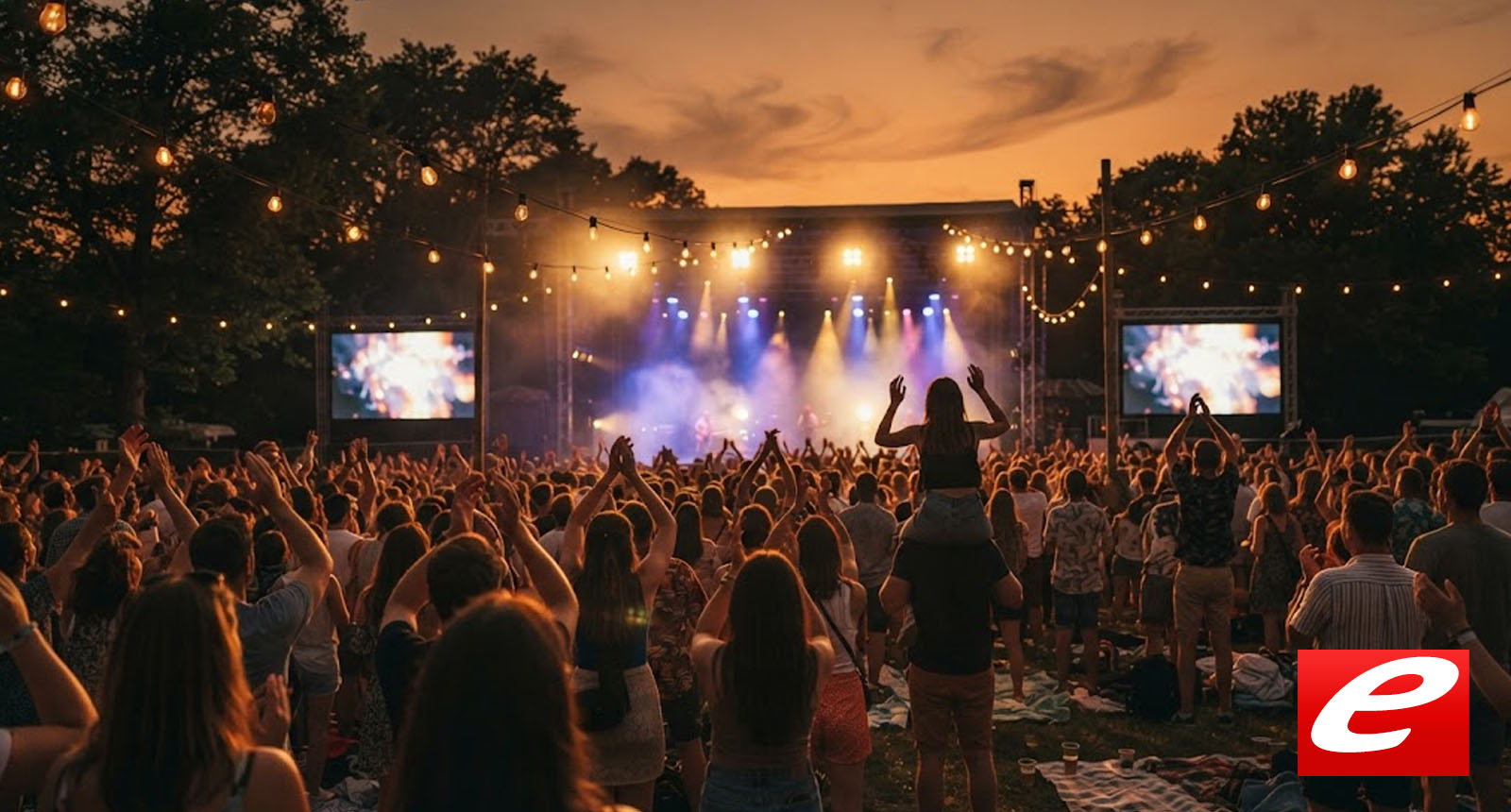
The best open-air concerts in summer
Which German open-air venues are particularly worthwhile, how they differ from indoor shows, and what to watch for when buying tickets.
A summer concert in a Roman-style theatre, a forest arena or in front of a castle is a different experience from the same band in an arena. Acoustics, weather, atmosphere — all three force trade-offs on the concert operation. Which German open-air venues handle this well, and what to watch for when buying.
Which open-air venues are worth knowing?
- Waldbühne Berlin — amphitheatre look with 22,000 seats next to the Olympic Park. Long tradition (concerts since the 1960s); a legendary final-whistle tradition after the last song.
- Loreley Freilichtbühne — rock plateau above the Middle Rhine valley, about 5,000 places. Smaller acts, but unmatched setting.
- Königsplatz Munich — 12,000 places in front of the Propylaea. Used mainly for classical (Klassik am Königsplatz) and larger pop concerts.
- Schlossplatz Stuttgart — temporary stage in the city centre, around 15,000 standing places.
- Festwiese Leipzig — 12,000 places next to the Monument to the Battle of the Nations.
- Tempodrom & Velodrom Berlin — both indoor-outdoor flexible; the Tempodrom often becomes an open-air stage in warm weather.
How does an open-air concert differ from an arena show?
The biggest difference is acoustics. An arena is designed for reflected sound — at an open-air the sound disperses outdoors and the sound engineer has to push harder with sub-bass and high-end boost. If you care about acoustic detail (think classical), pick a seat in the front third.
Weather is the second factor. Open-air concerts run in light rain, get interrupted in thunderstorms or are postponed. A cancellation insurance is worth it for expensive tickets, especially with a long journey. More on that in What to do when a concert is cancelled or postponed.
Atmosphere is the subjective part. Sunset concerts at Loreley or the Waldbühne have a quality for many people that can't be reproduced indoors.
What should you watch for when buying tickets?
Three points differ from indoor pre-sales:
- Seated or standing? Open-airs usually offer both — sightlines are generally okay from both, but standing allows more movement and is cheaper.
- Weather cancellations. Read the terms for how the organiser handles weather-related cancellations. Sometimes full refunds, sometimes only vouchers.
- Sight obstructions. Some open-air seats have pillars, light masts or camera towers in the view. Check the seating chart or google the specific block name before buying.
The best outdoor concert season runs from June to mid-September, peaking from mid-July to mid-August. For a front-row seat, use the early-bird sale — rows 1 to 10 are typically gone within days.