
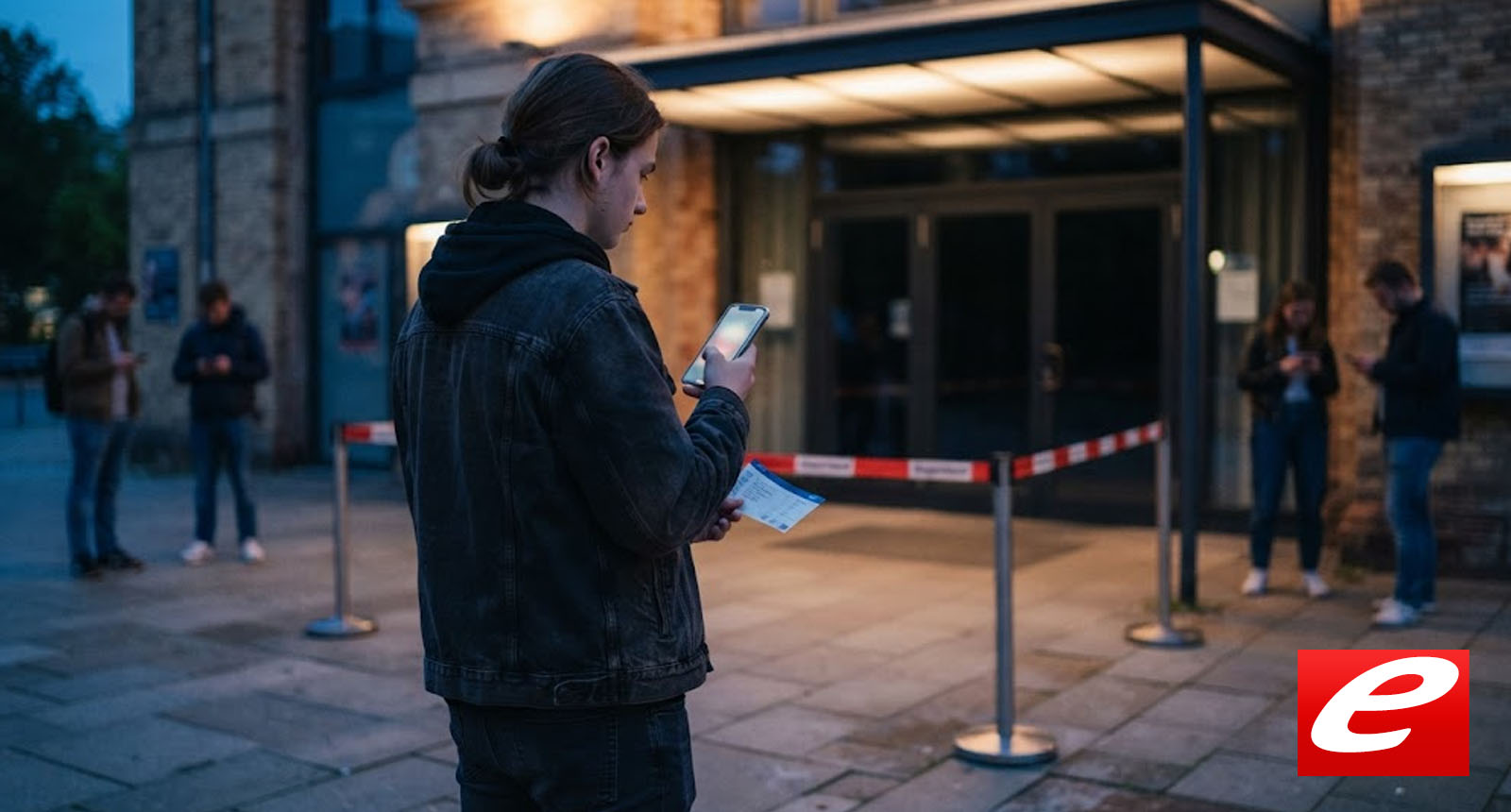
Concert postponed or cancelled — what now?
What happens legally depends on whether the show is rescheduled or cancelled outright, where the ticket was bought, and whether the buyer accepts the new date. Four questions cover most cases.
A text on the day of the event, or an email three weeks before: "The date has been postponed." What happens next depends on whether the tour is rescheduled or cancelled outright, where the ticket was bought, and whether the buyer wants to opt out of the new date. Four questions cover most cases.
When do I get a refund instead of a voucher?
If a concert is cancelled without a replacement date, the organiser must fully refund. Under German civil law (§ 326 BGB) the obligation falls away when the service becomes impossible. Service fees from the ticket seller are typically refunded as well because they count as ancillary costs of the main service. In practice this takes two to eight weeks depending on the seller.
If the concert is postponed and a replacement date is announced, the original ticket remains valid for the new date. Buyers who cannot attend on the new date have a refund claim — but only if the organiser communicates this option, or if the postponement is far enough out (several months) that it contradicts the original contract. The pandemic-era voucher rule under § 240 EGBGB applied only to events through early 2022 and is no longer in force.
What about service fees and processing costs?
On the primary market, service fees are refunded on cancellation as standard at Eventim, Reservix, Ticketmaster and Eventbrite. Postal handling fees usually stay with the buyer, even on cancellation. For pure e-tickets that question doesn't arise.
The secondary market is more complicated. StubHub and viagogo refund buyers from their buyer-guarantee fund if the original seller has already been paid out. Consumer protection authorities recommend reading the refund terms explicitly before any resale purchase — some providers refund only 90 percent, others tie the payout to a 60-day window after the event date.
What if the organiser doesn't respond?
If two months pass without an answer, three steps are standard.
First, a written demand by registered mail with a two-week deadline. Second, if payment was made by credit card or PayPal, initiate a chargeback. Credit card networks typically allow 120 days from the event date; PayPal allows 180 days from purchase. These windows are shorter than the statute of limitations under civil law, so don't postpone. Third, for larger amounts or multiple affected buyers, file an inquiry with the relevant consumer protection authority.
Organiser insolvency is a special case. Buyers then become insolvency creditors and have to file their claim with the insolvency administrator. Average recovery rates in such proceedings are in the low single digits. This is one reason why the question of organiser size and payment method matters at purchase time.
What if it's force majeure?
Natural disasters, pandemics, official bans — so-called force majeure — relieve the organiser of the duty to perform but not of the duty to refund the ticket price already paid. The legal construction has been reinforced multiple times by Federal Court rulings since 2020: if the concert cannot happen, the buyer gets the money back.
What organisers sometimes offer is a voluntary voucher as an alternative. This is an option, not a legal obligation, and the buyer can refuse it. Anyone accepting a voucher should check the expiry — typical windows are 12 to 36 months — and whether it can be applied to other events from the same organiser.